
Small-Business Expense Categories: Where Does This Purchase Belong?
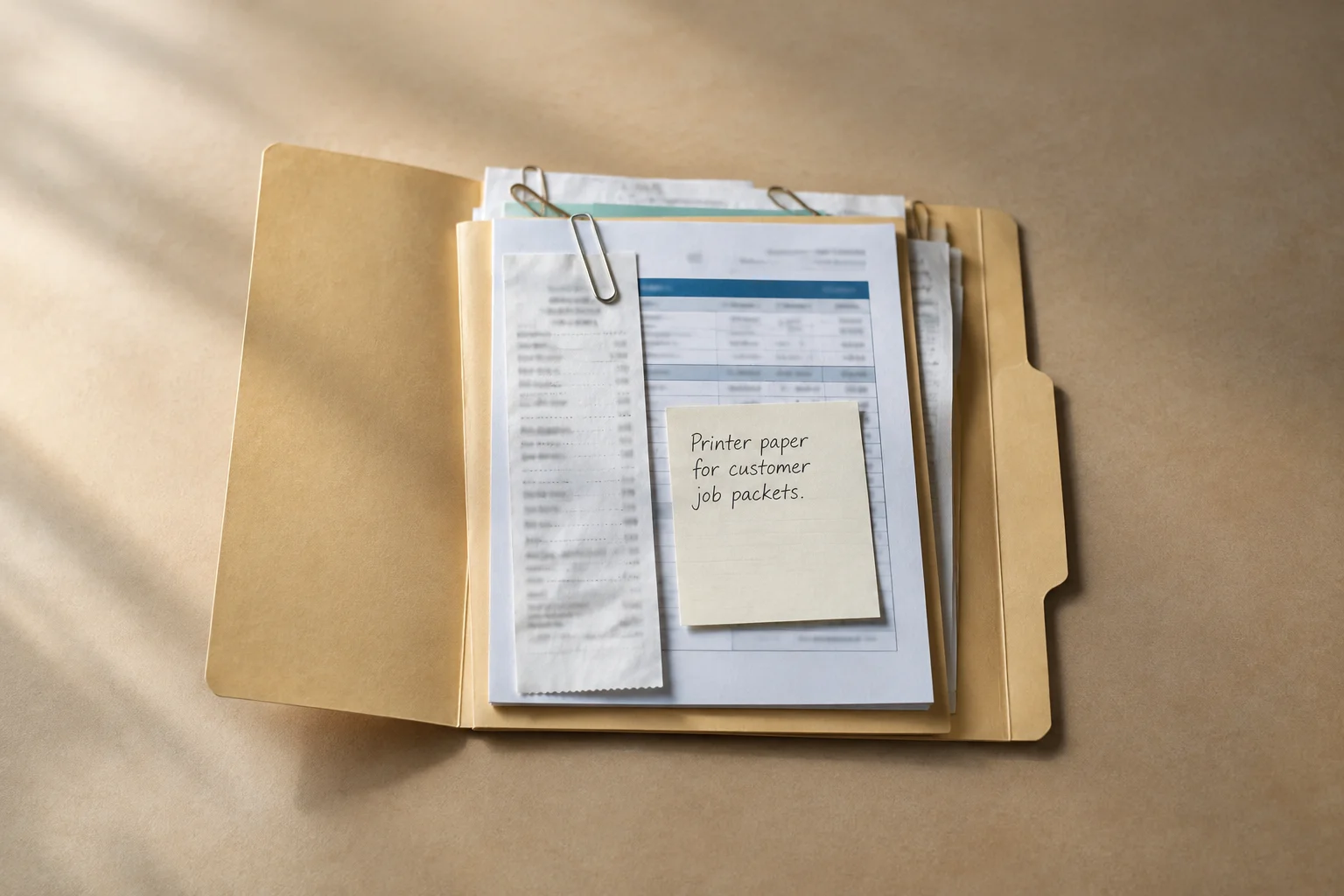
Not sure where that purchase belongs?
You’re looking at a payment in your books, and you know it was for the business. But now you have to pick a category. Office supplies? Equipment? Something else? It’s tempting to choose the closest one and move on.
Before I put that purchase in a category, I’d ask you what you bought and what you used it for. The store’s name only tells me where you shopped. It doesn’t tell me whether you came home with printer paper, a laptop, or something for the house.
Let’s work through the common expense categories for small business together. I’ll explain what I’d look at, why some purchases need another question, and why a payment leaving your bank account isn’t always an expense.
You don’t need to know all the accounting terms. Start by telling me what happened. We can work through the category—and keep any tax questions separate.
“If I record it as an expense, can I deduct it?”
Those are two different questions. The category tells us what the transaction represents in your books. The tax question is whether you can deduct the cost, when you can deduct it, and how much. Choosing a category doesn’t answer all of that.
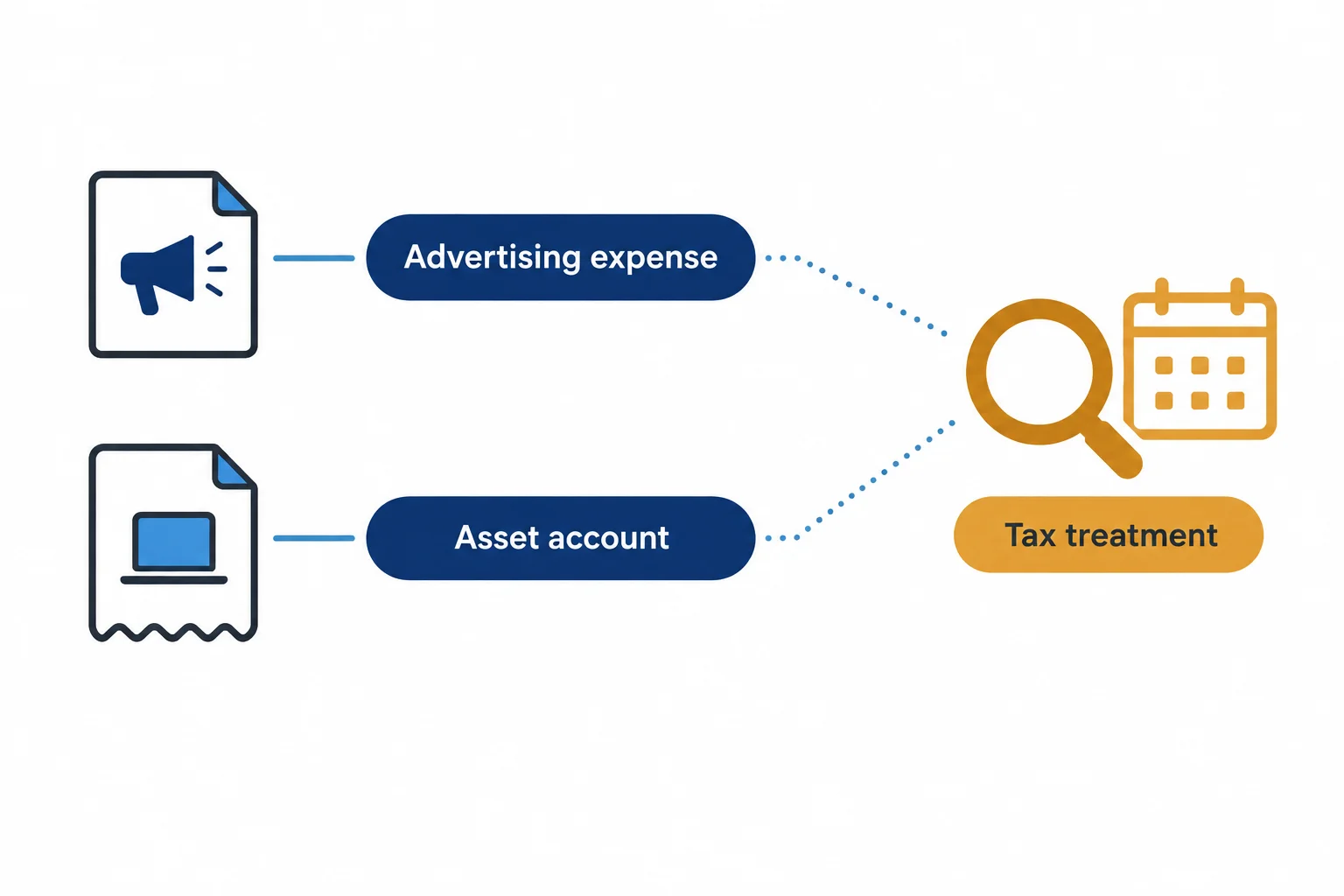
Take an advertising bill and a new computer. I might put the advertising bill under advertising expense. The computer may belong in an asset account—a place to record property the business owns. We still need to look at the tax treatment of each.
When you paid also matters, but it isn’t the whole answer. With the cash method, expenses are generally deducted in the year you pay them. With the accrual method, the starting point is generally when you incur the cost, with other rules to check. Some prepaid costs must be deferred or capitalized, which means paying now doesn’t always mean deducting now.
I’d also want to know how your business is set up. The IRS’s Publication 334, Tax Guide for Small Business covers Schedule C businesses, including sole proprietors and independent contractors. If you have a partnership or corporation, we shouldn’t simply apply the same instructions.
If that part needs review, leave the tax question beside the proposed category. You can keep your books moving without pretending the question is settled.
Tell me what you bought—not just where you bought it
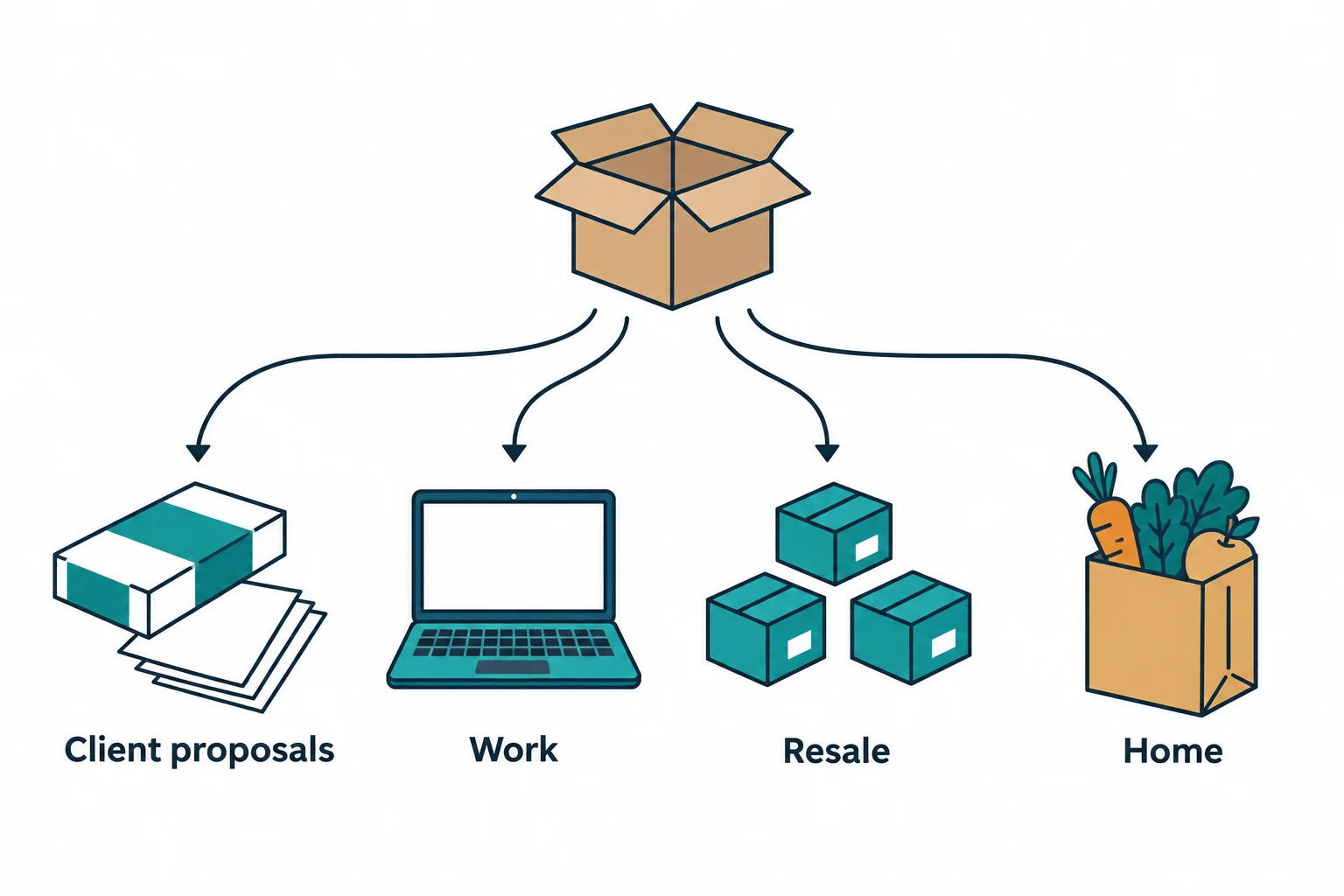
An online order might include paper for client proposals, a laptop, items you’ll resell, and groceries for home. If we put the whole order in “office supplies,” we’ve lost the details that explain what actually happened.
Here are the four things I’d want to understand:
What did you buy? The item or service description helps more than the store name.
What was it for? “Paper for printing client proposals” tells me how it connects to your work.
Was any of it personal? A personal item in the same order needs to be separated. Something you use for both work and home needs a closer look.
What kind of payment was it? We may be looking at an everyday running cost, equipment, goods for resale, or money moving between accounts.
Keep the item or service, business purpose, amount, date, and payment together. Those are the details that help us understand and support the entry later.
If your books already have a category that fits, use it consistently. You don’t need to invent a new label every time. And if two categories seem possible, tell me which one you’re considering and why.
Ten categories you’re likely to come across
Your category names may be a little different from these. That’s fine. I’m looking for a consistent way to describe what your business spends—not a perfect match to someone else’s list.
Office supplies. Think paper, pens, and other supplies you use up doing your work. If you bought a laptop or products to sell to customers, I’d look at those separately.
Rent and workspace costs. Rent for a separate business office can fit here. If you’re talking about rent on your home, we need a separate home-office analysis before deciding whether any business allocation applies.
Utilities, internet, and phone. These might include electricity for your premises or your business phone plan. If the service also covers your home or personal use, tell me so the business portion can be identified.
Advertising and marketing. Paid ads, promotional printing, and campaign design can fit here. If you paid a designer, I’d ask what they created. Work on an advertising campaign can belong with marketing rather than general professional fees.
Software and subscriptions. Your regular scheduling or bookkeeping subscription may fit here. A different software purchase could need different treatment, so give me the details instead of assuming everything called “software” works the same way.
Professional services. Accounting, legal, and consulting work often goes here. But tell me what the person did for you. The purpose of the work can affect how we record the cost.
Insurance. A business liability policy or commercial property policy can fit here. If you’re unsure about a premium, let’s look at what the policy covers before calling it a business cost.
Repairs and maintenance. Servicing equipment is different from making a substantial upgrade. Improvements may require capitalization, meaning the cost may need to be recorded as an asset rather than an immediate expense. Tell me what changed, and we can review it.
Travel, transportation, and meals. Tell me where you went and how the cost relates to the business. We may need separate categories for lodging, transportation, and meals. Then we can check the applicable tax treatment without assuming every recorded cost is deductible.
Inventory and cost of goods sold. If you bought something to resell, that’s different from paper you use in the office. Those purchases need a business- and accounting-method-specific inventory process. Tell me what you’re selling so we can keep those costs separate.
What if you use it for work and home?
If your order includes office paper and personal groceries, we can look at the separate items. A shared internet plan is different. There, we’re asking how much of one service relates to the business.
I’d ask how you arrived at the business share and what records support it. There isn’t much help in choosing a percentage just because it sounds reasonable. Tell me how you use the service, and flag anything you’re unsure about. For tax purposes, the personal portion is generally not deductible.
A computer brings up another question. Paper gets used up; a laptop may serve the business for years. That’s why I’d look at whether it belongs in an asset account. Its expected useful life and business use are among the factors in depreciation treatment.
The price alone doesn’t settle it. We also need to consider your accounting policies and the tax rules that apply. Recording the computer as an asset and deciding when its cost is deductible are separate decisions.
So if you use that laptop for both client work and personal tasks, tell me both. We need to work through how to record it and how to support the business-use share.
“Money left my account. Isn’t that an expense?”
Not always. Before we choose an expense category, let’s look at where the money went. These four payments tell different stories:
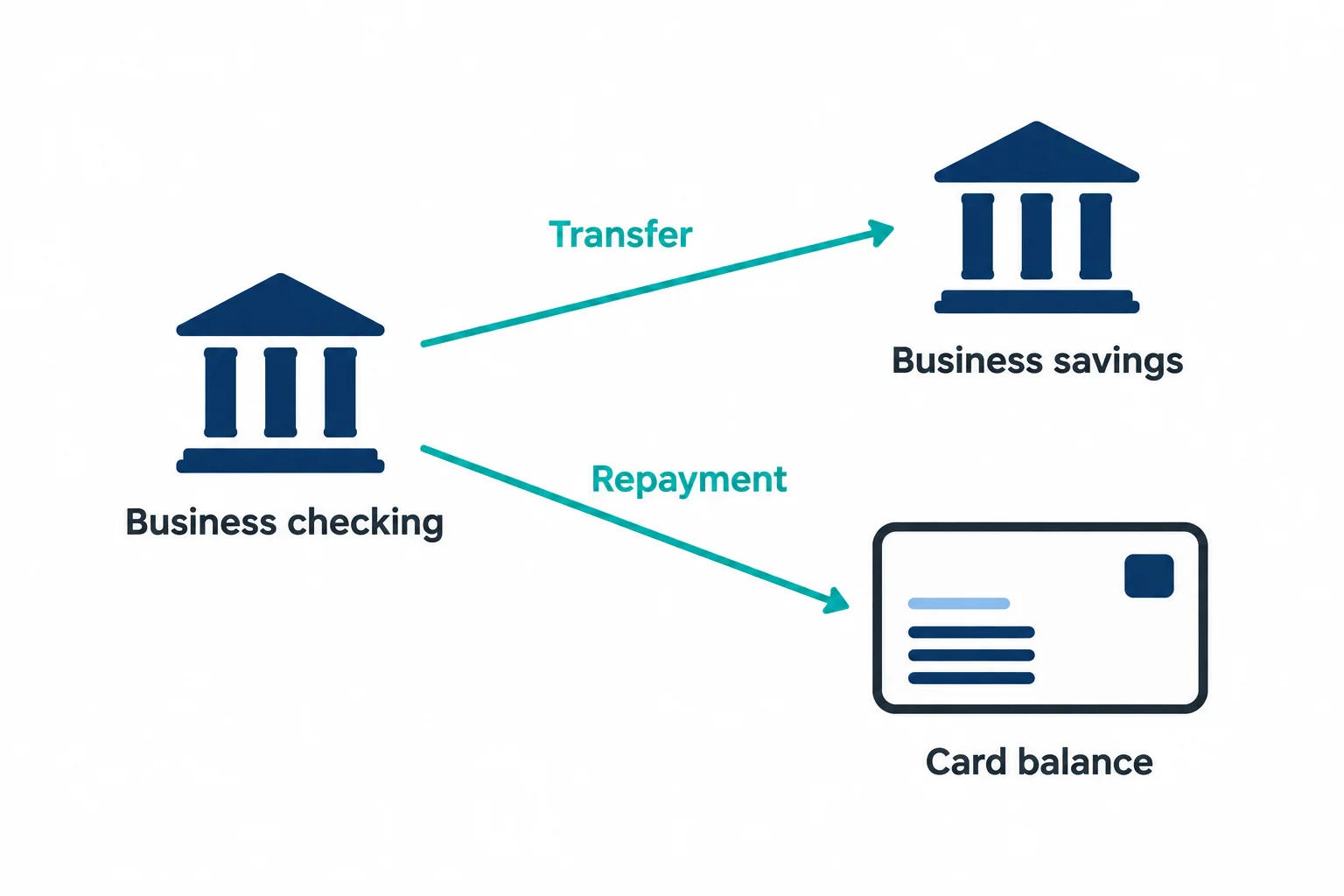
You moved money from business checking to business savings. The money is still in the business; it’s just in another account. We need a transfer between the two accounts.
You paid the business credit card. If the purchases are already in your books, we don’t want to record them again as another expense. Record or match the card payment separately so it reduces what you owe on the card.
You made a loan payment. Let’s use the lender’s breakdown to see what went toward principal, interest, and fees. Principal reduces the loan balance; the whole payment shouldn’t be called “interest.” Business interest deductions have requirements and limitations, so we still need to check the tax question.
You took money out for personal use. If you’re a sole proprietor, that’s an owner draw rather than a running cost of the business. Personal withdrawals are not deductible business expenses. If you have a partnership or corporation, let’s review the payment before using the sole-proprietor draw category.
Let’s look at eight purchases and payments
Here’s how I’d work through these examples with you. The category is a starting point; the last column shows what we still need to understand. Keep support for what you bought and its business purpose with the entry, and leave any tax question open for review.
Illustrative transaction | Likely bookkeeping category | Why | What to check |
|---|---|---|---|
Printer paper from an online retailer | Office supplies | Consumable used for business | Confirm items and business purpose. |
Laptop from the same retailer | Equipment/asset, pending policy review | Longer-lived property; equipment treatment needs review | Confirm business use and placed-in-service date; ask your accountant about treatment. |
Mailing envelopes and personal groceries in one order | Split business supplies and personal amount | Items have different purposes | Identify item amounts; ask how your entity should record the personal portion. |
Phone bill covering work and personal calls | Phone expense for supported business portion | Shared use requires allocation | Ask about a reasonable allocation basis and supporting records. |
Paid search-ad campaign | Advertising | Promotes the business | Confirm business connection and service period. |
Monthly rent for a separate commercial office | Rent, subject to accounting method and agreement | Pays for business premises | Review agreement; separate rent from deposits or prepaid amounts. |
Business checking-to-savings transfer | Account transfer | Moves cash between business accounts | Confirm both accounts and match both sides. |
Loan payment with principal and interest | Split debt reduction and interest; review fees separately | Principal reduces debt; interest is a separate cost | Use lender's breakdown; ask your accountant about unresolved treatment questions. |
Give me the question along with the transaction
If you’re stuck, send the date, vendor, amount, and payment account. Tell me what you bought and how you use it. If you have a category in mind, include that too, along with the receipt and payment support. Then tell me which part you’re unsure about.
For that laptop, your note could be as simple as:
"This laptop is used for client work and personal tasks. I haven't settled the business-use share. Should it go to equipment, and what do you need to determine the allocation and treatment?"
That gives me something useful to work with. I can see what you’re proposing and what we still need to establish. You don’t have to solve the bookkeeping and tax questions before asking.
For a loan payment, you might ask, “Which part reduces the loan balance, and which part is interest or fees?” Include the lender’s statement so we have the breakdown in front of us.
If your system has an uncategorized or review status, you can use it while we work through the question. Just keep track of who’s following up. We don’t want “review later” to become the permanent home for the entry.
Start with the payment you’re unsure about
Pick one payment you’ve been putting off. Tell me what you bought, what you used it for, and the category you’re considering. If you don’t have a category in mind, start with those first two details.
“Laptop for client work and personal use—how should we record it?” is enough to open the conversation. We can ask the next question from there.
If those questions are piling up across older transactions, our bookkeeping cleanup services are a place to start. Tell me where you’re getting stuck. You don’t need to make the books look finished before we talk.